
Why Risk-Based Thinking Matters in ISO Standards | WIZMS Dubai
Why Risk-Based Thinking Matters in ISO Standards
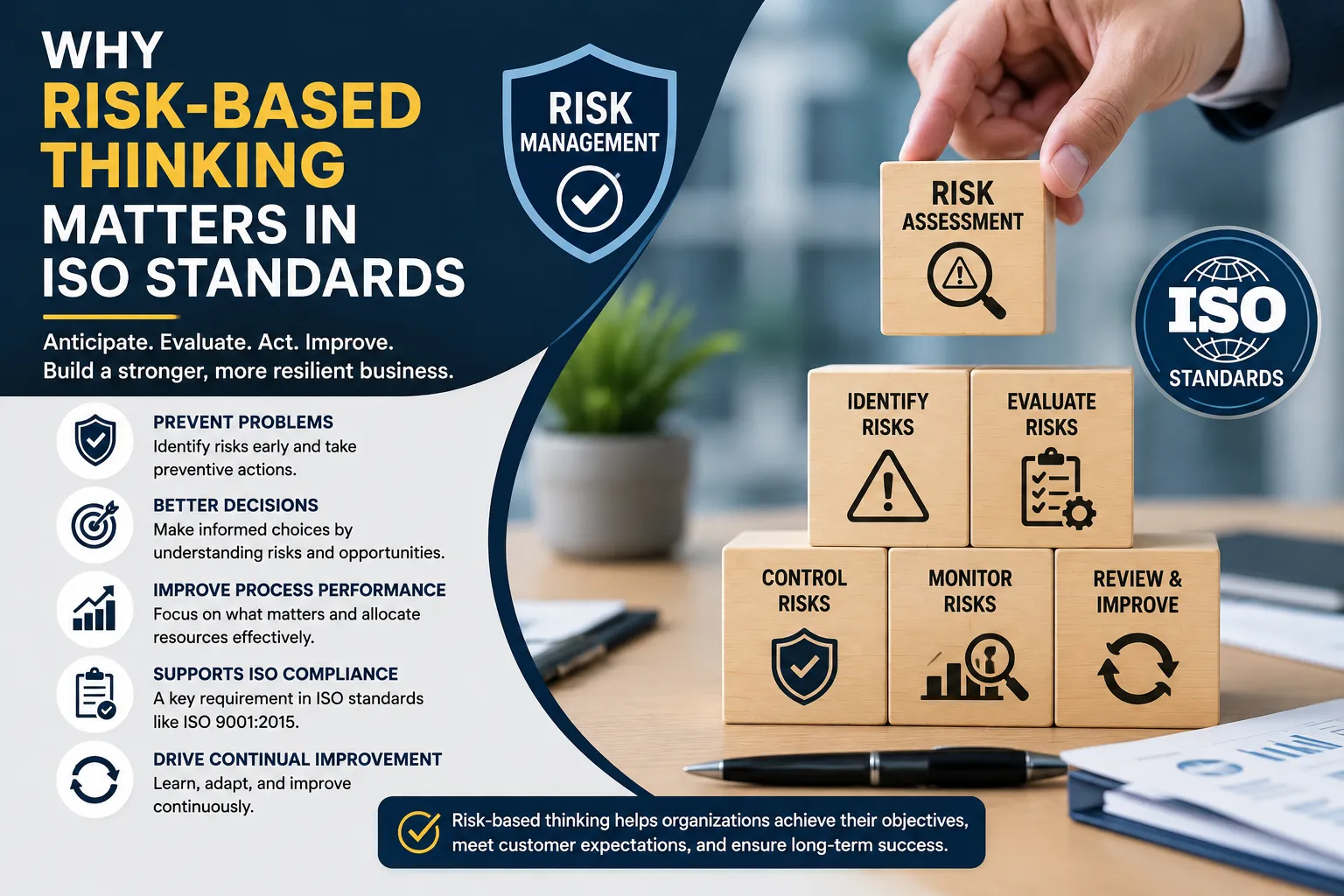
Businesses face uncertainties every day, from process failures and customer complaints to operational disruptions and changing regulatory requirements. Risk-Based Thinking helps organizations consider these possibilities before they become significant problems. ISO 9001 specifically incorporates risk-based thinking into its approach to quality management, requiring organizations to consider risks and opportunities when planning and managing their processes.
What Is Risk-Based Thinking?
Risk-based thinking means considering what could affect business objectives and deciding what actions or controls may be appropriate. It is not necessarily about creating complicated risk registers. Instead, it encourages employees and management to consider potential problems while planning and carrying out everyday activities.
Why Does It Matter?
1. Helps Prevent Problems
Identifying potential failures early allows businesses to introduce suitable controls before they negatively affect customers, employees, or operations.
2. Improves Decision-Making
Considering risks and opportunities gives management additional information when deciding where to allocate resources, improve processes, or introduce changes.
3. Strengthens ISO Compliance
Risk-based thinking is an important part of effective quality management. ISO guidance explains that organizations should plan and implement actions addressing both risks and opportunities.
4. Supports Better Processes
Businesses can determine which activities require greater attention and stronger controls based on their potential impact. This can help make operational processes more consistent and effective.
5. Encourages Continual Improvement
Risk-based thinking helps organizations move beyond simply correcting problems after they occur. It encourages a more proactive approach to identifying weaknesses and potential opportunities.
How Can Dubai Businesses Apply Risk-Based Thinking?
Companies pursuing ISO Certification in Dubai can incorporate risk considerations into areas such as supplier management, customer service, project planning, employee competence, information security, workplace safety, and operational controls.
For example, a facility management company could identify the consequences of equipment failure and establish preventive maintenance controls before an interruption affects its client.
Businesses seeking ISO 9001 Certification can therefore use risk-based thinking as part of a broader Quality Management System, helping connect everyday processes with business objectives.
Final Thoughts:
Risk-Based Thinking is not simply an ISO audit requirement. When integrated into daily business decisions, it can help organizations anticipate challenges, use resources more effectively, strengthen processes, and pursue improvement opportunities. For businesses considering ISO Consultant in Dubai support, incorporating risk and opportunity considerations into the management system can be an important step toward practical and sustainable ISO Compliance.