
Five Reasons Businesses Fail ISO Audits | How to Avoid Them | WIZMS
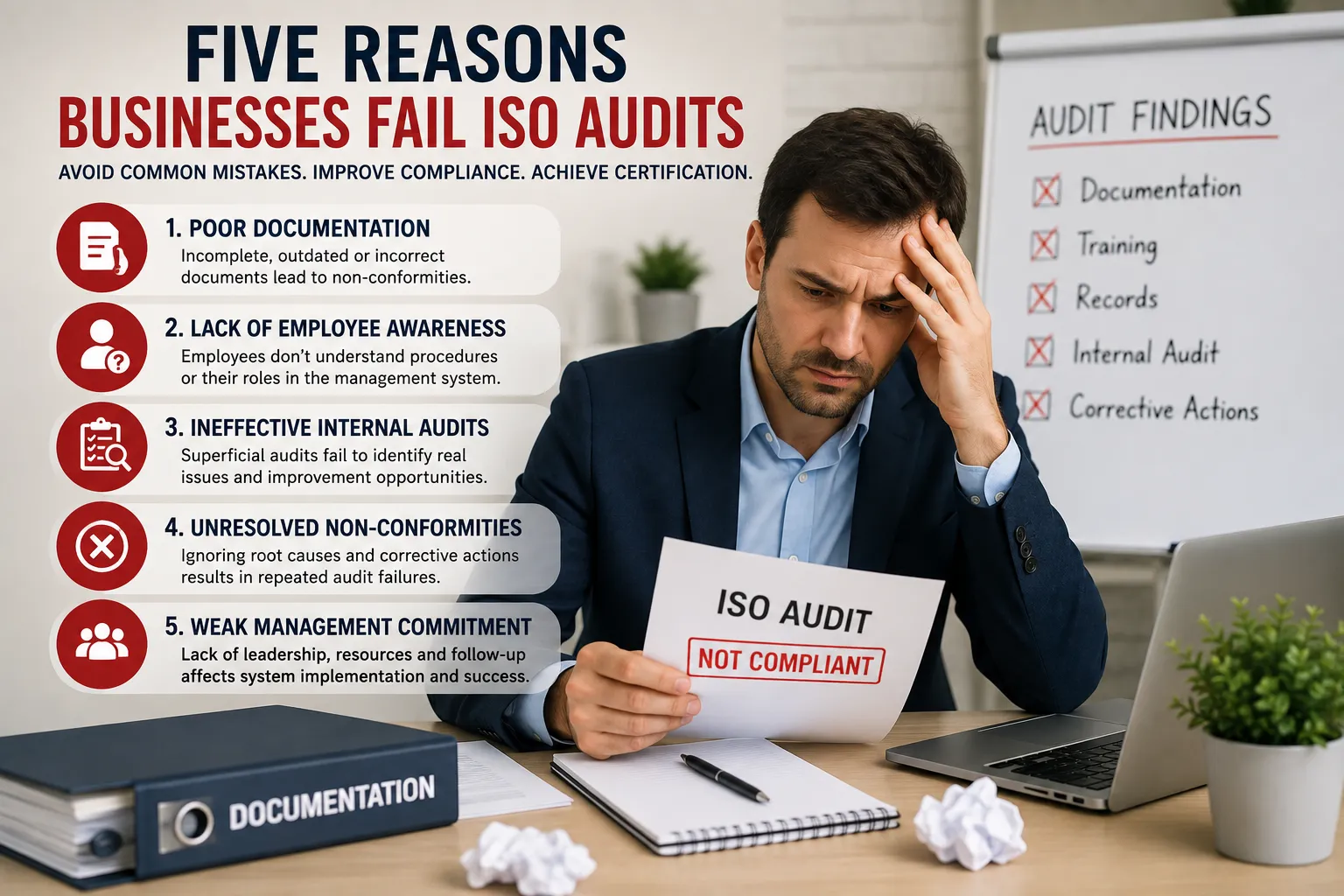
Five Reasons Businesses Fail ISO Audits
Preparing for an ISO Certification Audit requires more than creating policies and procedures. Businesses must demonstrate that their management system is properly implemented, maintained, and continuously improved. Understanding the Five Reasons Businesses Fail ISO Audits can help organizations identify weaknesses and improve their ISO Audit Readiness.
1. Poor or Outdated Documentation
Incomplete procedures, missing records, and outdated documents can create compliance gaps. Businesses should regularly review policies, procedures, work instructions, and records to ensure they accurately reflect current operations.
2. Lack of Employee Awareness
Employees play an important role in ISO Compliance. If staff members cannot explain their responsibilities or demonstrate how they follow established procedures, auditors may identify implementation gaps. Regular awareness and competency training can improve employee confidence.
3. Ineffective Internal Audits
An ISO Internal Audit should identify problems before the certification audit. When internal audits are skipped, poorly planned, or treated as a paperwork exercise, significant issues may remain undetected. A structured ISO Audit Checklist can help auditors evaluate processes consistently.
4. Unresolved Non-Conformities
Organizations must investigate audit findings, identify root causes, and implement effective corrective actions. Repeated or unresolved ISO Non-Conformities can indicate that the management system is not being effectively maintained.
5. Weak Management Commitment
Leadership involvement is essential to successful ISO Certification. Management should provide resources, establish objectives, review performance, and support continual improvement.
How to Improve ISO Audit Preparation?
Effective ISO Audit Preparation involves conducting internal audits, reviewing documentation, training employees, monitoring performance, and closing corrective actions before the external assessment.
Understanding common causes of ISO Audit Failure allows businesses to take preventive action. With strong leadership, trained employees, accurate documentation, effective internal audits, and timely corrective actions, organizations can strengthen ISO Compliance, improve audit readiness, and approach the ISO Certification Process with greater confidence.